

Can you enjoy sushi if uncooked seafood puts you off?
Yes, you can enjoy sushi if uncooked seafood puts you off. Sushi is about seasoned rice with toppings or fillings, and those can be raw, cooked or vegetarian. The smart move is to read the menu by form and ingredient, then choose the parts of the table that suit you.
We see the doubt most often when one person likes the idea of sushi and someone else hears “raw fish” and mentally leaves the table. That makes the meal feel narrower than it is.
One small shift fixes most of the confusion. Start with the rice, then look at what sits on or inside it. From there, sashimi, cooked rolls, vegetarian sushi and shared hot plates all become much easier to place.
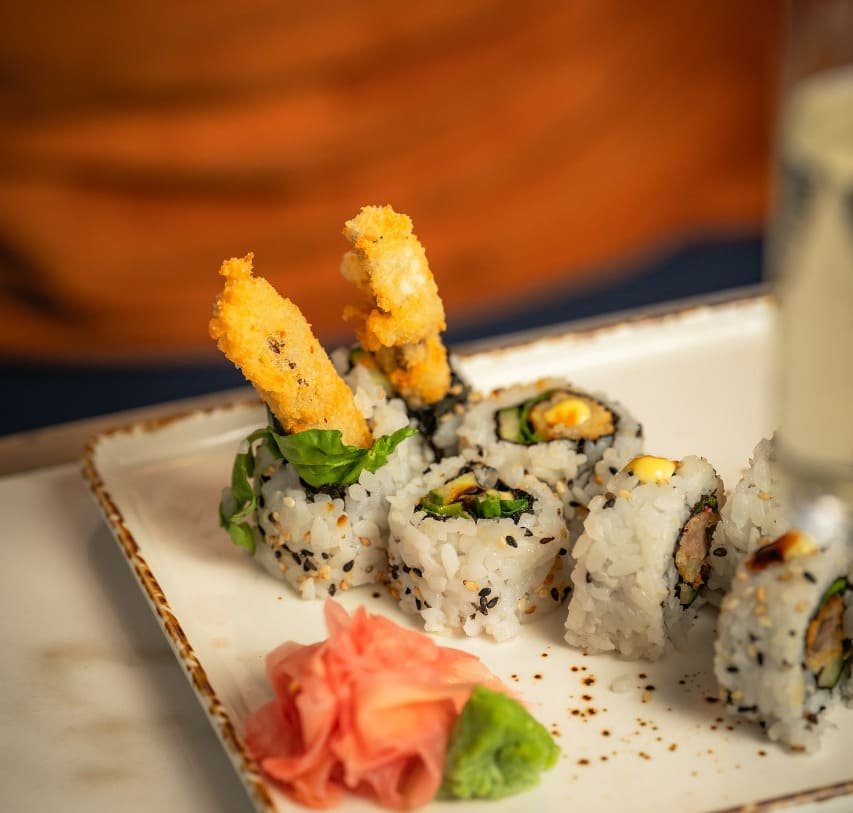
Crispy ebi prawn tempura sushi roll at Titu sushi restaurant London
The rice makes sushi sushi
Sushi is built around vinegared rice, not raw fish. The Japan National Tourism Organization defines sushi as slightly sweet vinegared rice, called shari, paired with neta such as seafood, egg or vegetables. Those toppings and fillings can be raw or cooked.
In plain menu terms, that means raw fish is one possible choice. Egg, vegetable fillings and cooked seafood can also sit with sushi rice and still be sushi. Once you know that, the question “is sushi raw fish” becomes much easier to answer at the table.
Our advice is to read the ingredient line before you decide. If the rice is there, you are in sushi territory; if you want to know whether it is raw, cooked or vegetarian, the topping or filling tells you.
Why sashimi signals raw fish without rice
A menu may place sushi and sashimi close together, which is where the mix-up starts. They sit in the same part of the meal, but they do different jobs.
Sashimi is raw fish served without sushi rice, not another kind of sushi. It is not another kind of sushi. That makes it the clearest menu signal if you want raw fish on its own. It also gives you a simple avoid line if raw fish is the thing you are steering clear of.
Around a shared table, that distinction helps. One person can order sashimi because they want clean slices of fish, and someone else can choose rolls or cooked dishes without feeling they have ordered the same thing by accident.

From the kitchen: Ask for the menu in the order you want to eat it. Starting with sushi and then adding hot plates helps mixed tables avoid over ordering raw dishes.
Head Chef
TITU, Mayfair
Menu headings show what you are ordering
Menu headings tell you the shape of the sushi before they tell you everything about the ingredient. Nigiri, maki and temaki are useful words, but the filling or topping still carries the answer to whether the piece is raw, cooked or vegetarian.
The table below compares common sushi menu words with what each word tells you about the order.
| Menu word | What it tells you |
|---|---|
| Nigiri | Hand-moulded rice with a topping, which can vary |
| Maki | Rolled sushi with filling inside |
| Temaki | A cone-shaped hand roll |
| Sashimi | Raw fish served without sushi rice |
After the heading, check the short description beside the dish. Words such as vegetable, egg, prawn tempura, cooked fish or grilled ingredients point you in a different direction from raw tuna or salmon. We look at both parts of the line: the form first, then the ingredient.
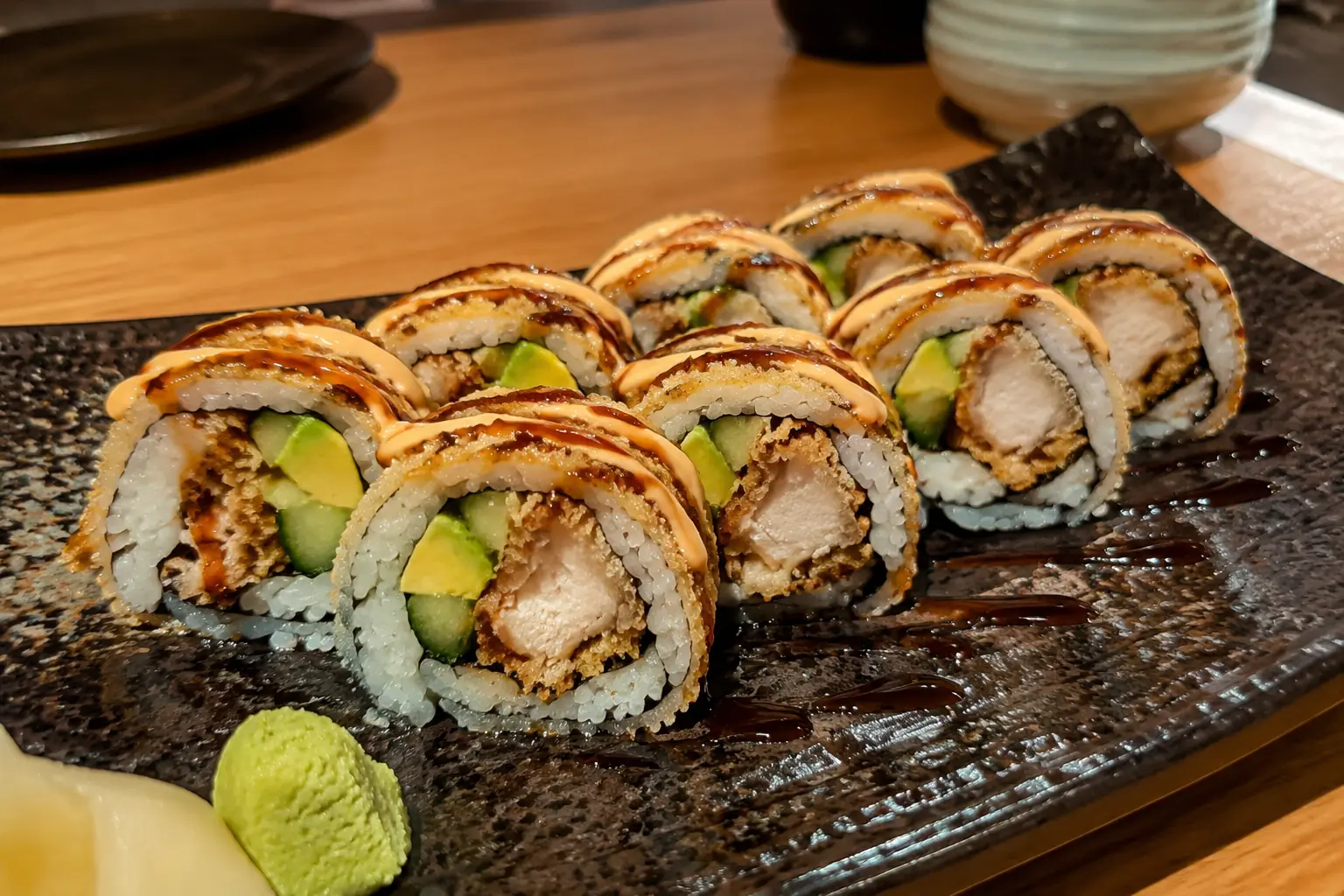
Cooked chicken katsu avocado cucumber Japanese fusion sushi rolls - Illustrative Image
The UK safety note stays simple
When raw fish is part of the decision, UK guidance is worth keeping simple. Restaurants deal with raw fish as a food handling matter, and diners mostly need to know which menu route suits their own situation.
Raw fish in restaurants
Food Standards Agency guidance says fishery products intended to be eaten raw by food businesses must usually be frozen to control parasites unless an exemption applies. The guidance names sushi and sashimi as examples, and gives freezing treatments of at least minus 20°C for not less than 24 hours, or minus 35°C for not less than 15 hours.
For you as a diner, the practical choice stays simple. If raw fish is fine for you, sashimi and raw toppings are on the table. If you prefer to avoid it, choose cooked fish, cooked shellfish, vegetables or hot dishes.
Pregnancy choices
NHS pregnancy advice, last reviewed on 15 June 2026, says cooked fish, cooked shellfish and sushi made with cooked fish or cooked shellfish are safe to eat. The same advice says raw fish, raw shellfish and sushi made with raw fish or raw shellfish should be avoided during pregnancy.
That gives you a clear filter when ordering. Go for cooked sushi, vegetarian sushi or the cooked side of the wider menu, and leave the raw fish section alone.
From the kitchen: If one guest is avoiding raw fish, agree on a shared rule for sauces and garnishes as well as the rolls. That keeps the table clear when a dish looks safe at first glance.
Head Chef
TITU, Mayfair
Why mixed tables can still choose sushi
A meal rarely turns on one person’s roll. In Shepherd Market, Mayfair, a table might include someone who wants sashimi, someone who wants cooked food, and someone who is choosing vegetarian dishes. Sushi works best there when it is treated as one part of the table, alongside small plates and hot dishes.
At TITU, we cut nigiri, maki, sashimi and signature rolls to order, with sushi sitting beside handmade gyoza and sharing plates. That matters because a group does not have to agree on raw fish before the meal makes sense.
Halal meat sourcing widens the table again, including wagyu, and vegetarian, vegan and gluten free dishes sit within the main menu. In a small Mayfair room, that is a practical thing rather than a grand statement: more people can order from the same table without turning the meal into a negotiation.
So the better question is whether the menu gives your table enough routes. TITU is built around that kind of meal, where sushi can be raw, cooked or vegetarian, and the table still feels joined up.
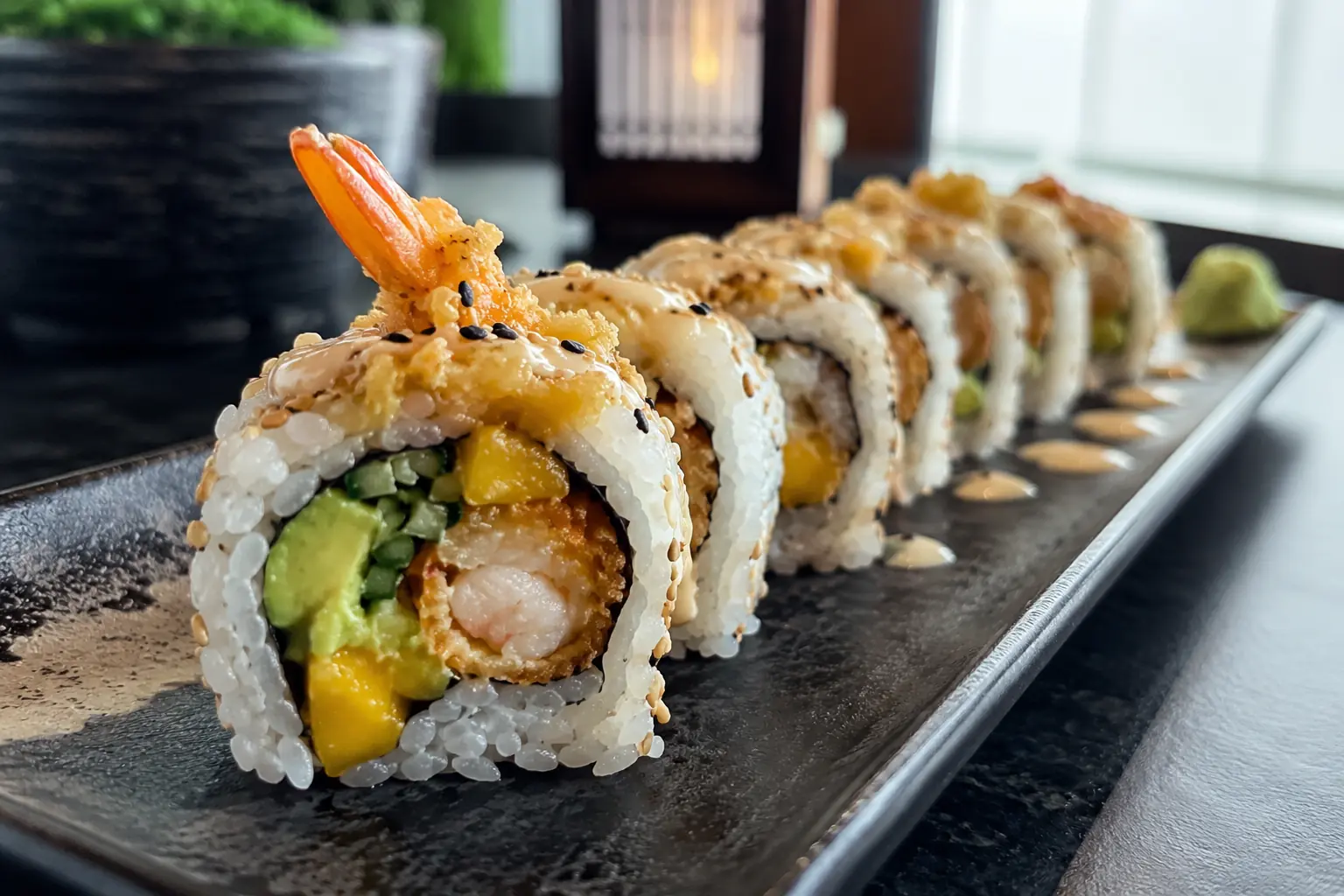
Crispy tempura prawn mango avocado Japanese fusion sushi rolls - Illustrative Image
Questions our Mayfair guests ask us about sushi
Is vegetarian sushi real sushi?
Yes, vegetarian sushi is real sushi when it is built around vinegared rice with a vegetable or other suitable filling. Traditional forms can include vegetarian choices, so fish is not the test.
Do all sushi rolls contain fish?
No. Rolls can contain seafood, cooked fillings, egg or vegetables, depending on the menu. The quickest check is to read the ingredient line rather than relying on the word “roll”.
What should I say if I am avoiding shellfish?
Tell the team when you order, because shellfish can appear in sushi, small plates and sauces. Menu marks help, but a direct note is the safest way to make the table clear.
Does halal meat sourcing mean every dish is alcohol free?
No. All meat we serve is sourced halal, but alcohol is served on the premises and some dishes contain alcohol. If that matters for your table, ask before ordering.
Can I order sushi with warm food on the same table?
Yes. Sushi can sit beside gyoza, grilled dishes, fried dishes and vegetables, so the meal does not need to feel cold or narrow. That mix is often the easiest way to order for a group.