
What will you get if you order aburi?
You get sushi whose topping has been briefly seared, so the surface smells warmer and tastes richer while the centre usually keeps the feel of raw fish or seafood. We read aburi as a dining clue: expect flame, aroma and texture before you expect a fully cooked dish.
On a menu, aburi tells you something useful before the plate arrives. It points to a seared or torched finish, most often on the topping, that changes the first bite. The rice still plays the usual sushi role, clean and supportive.
For a Mayfair meal, that matters because a table can include very different levels of sushi confidence. Someone who likes sashimi may order freely. Someone who pauses at raw fish may find aburi easier to picture because the surface has warmth and aroma.
If fully cooked fish is your line, choose grilled dishes. If you enjoy sushi and want a little smoke, softness or richness, aburi is worth knowing.
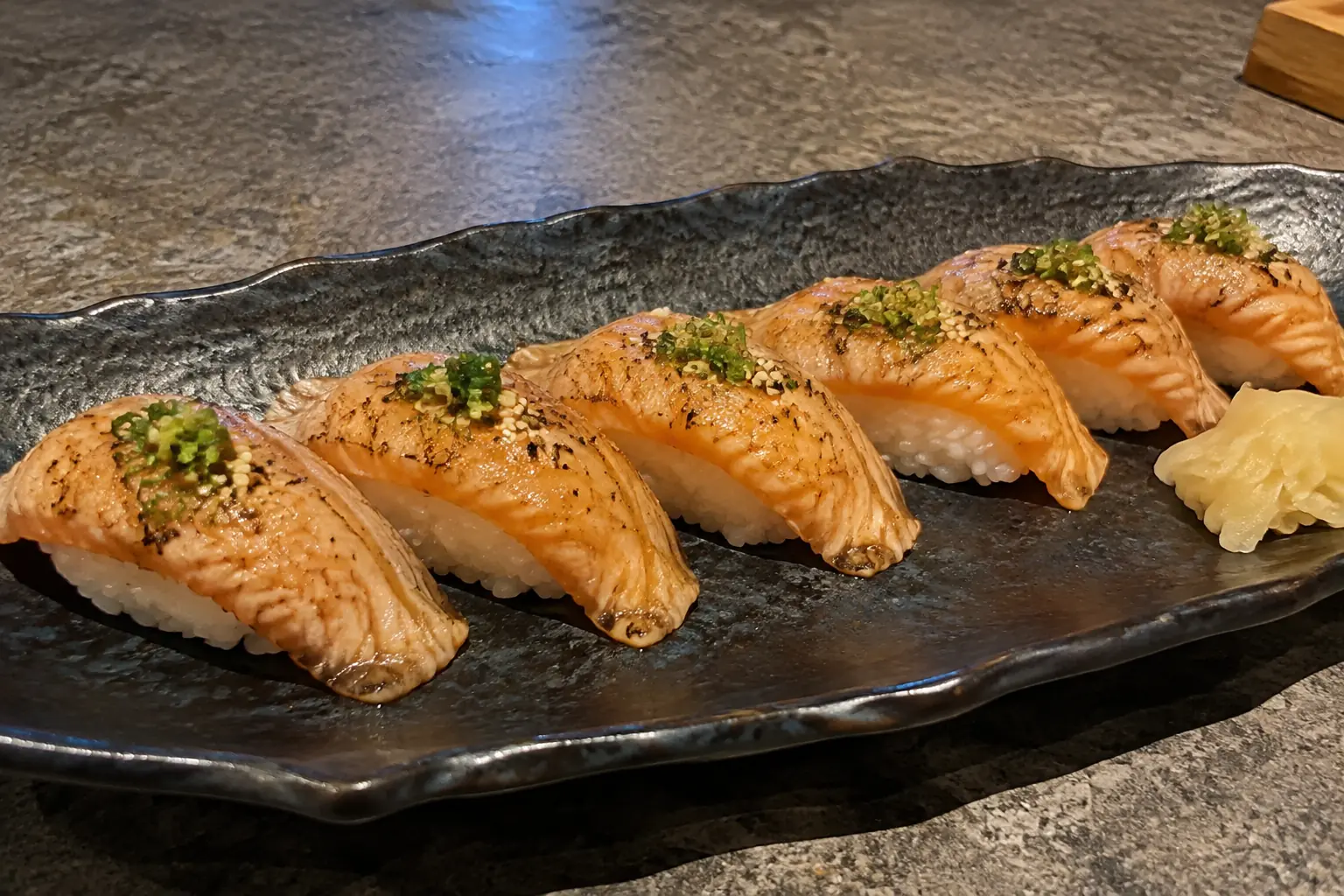
Flame seared salmon aburi nigiri with spring onion and sesame - Illustrative Image
See what flame searing changes
Aburi changes the surface of the sushi topping first. The word comes from aburu, meaning to roast or to sear, and in a restaurant setting it usually points to brief, intense heat from a flame.
Modern kitchens may use burners for that quick finish, while older methods used glowing charcoal. Either way, the heat is short and focused. We are talking about a surface treatment that gives the topping a different feel as soon as it touches your tongue.
A seared sushi topping can smell fuller because heat creates the same kind of browning reaction that gives toasted food its savoury edge. Fat on the surface can soften too, which is why flame-seared sushi often feels richer than the same fish served completely raw.
You do not need to know the kitchen method to order well. If a menu says aburi, torched sushi or flame-seared sushi, you can expect a warmer, more aromatic surface and a different texture in the first bite.
Surface searing leaves the centre largely raw
Aburi is usually seared on the surface, not cooked through. We think of it as sitting between raw sushi and grilled fish. That is useful if you are deciding whether the texture will suit you.
The seared surface
Across the top, the fish or seafood may look lightly browned, glossy or gently blistered. Salmon, mackerel and scallop are all common examples of toppings where aburi can work well, because the surface reacts clearly to heat.
That visible change brings most of the flavour shift. A warm edge, a little smoke and a softer surface can make the piece feel fuller than standard nigiri, even when the centre keeps its raw character.
The largely raw centre
Inside, aburi sushi raw inside is the normal expectation. The middle keeps the smooth texture you would associate with raw fish or seafood, so the bite has two parts: the warmed surface first, then the cooler centre.
Raw or seared sushi can feel more approachable for some diners, because the first impression is warmer and more aromatic. Anyone who wants fish cooked all the way through will be happier with a grilled plate.

From the kitchen: Ask which fish is being seared before you order. A menu name can stay the same while the texture changes a lot from salmon to scallop.
Head Chef
TITU, Mayfair
Aburi, tataki and oshi sushi stay separate
A Japanese fusion menu can put three similar-looking words in front of you at once: aburi, tataki and oshi sushi. Tataki is a separate seared and seasoned preparation. It is not another name for aburi.
The table below compares aburi, tataki and oshi sushi with the menu meaning each term usually carries.
| Menu term | What it usually tells you |
|---|---|
| Aburi | The surface of the sushi topping has been seared or flame-treated |
| Tataki | The fish or meat has been seared, cooled, sliced and seasoned |
| Oshi sushi | The sushi has been pressed into shape, and may sometimes be served with an aburi-style top |
Aburi sushi compared with regular sushi mainly comes down to that seared surface. Tataki is served in a different way after searing, and oshi sushi is about shape and pressing. Once you keep those jobs separate, the menu becomes much easier to read.
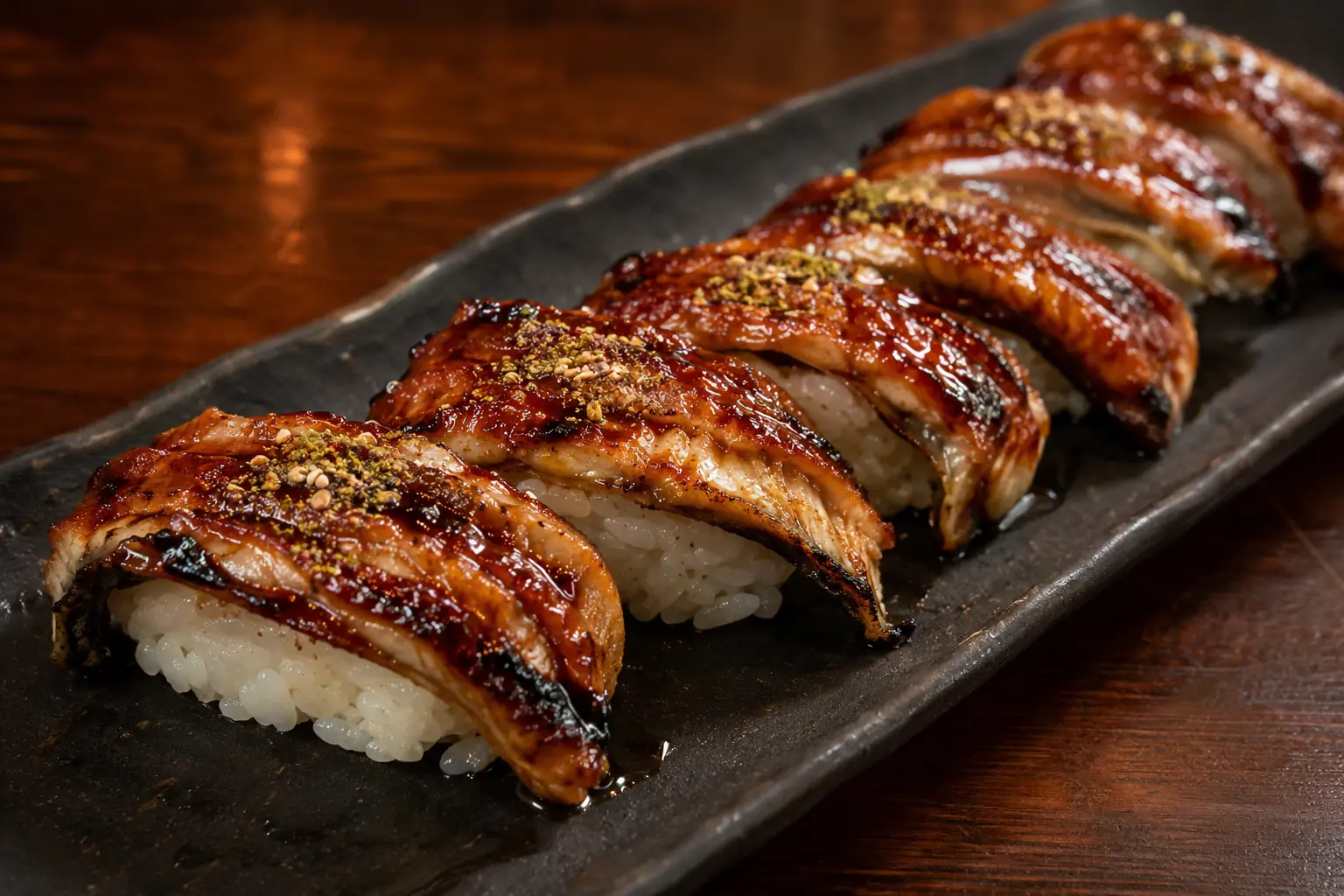
Glazed cooked eel aburi nigiri with sesame and sansho pepper - Illustrative Image
Choose aburi for the right kind of order
One person at the table loves sushi. Another likes the idea, then slows down at the thought of fully raw fish. Aburi is useful in that moment because it gives the piece more aroma and warmth while keeping the sushi structure familiar.
For raw fish beginners, aburi sushi can be a sensible bridge if they already enjoy clean seafood flavours. Fatty toppings such as salmon or tuna respond well because searing can soften the surface fat and add a light smoky note. Scallop can also suit the method because its sweetness sits well with gentle heat.
Use these checks when ordering aburi sushi:
- Choose it when you want a richer first bite than standard nigiri.
- Ask what topping is being seared if the menu name sounds broad. Salmon, tuna and scallop all give different results.
- Use soy sauce lightly, especially if the sushi already has sauce, seasoning or a brushed finish.
- If your table is sharing, order aburi alongside cleaner pieces so the richer flavours have some balance.
TITU makes this kind of mixed order feel natural because we serve sushi beside handmade gyoza and small plates. That wider table matters: aburi, where a menu offers it, works best as part of a meal with changes in texture, heat and freshness.
From the kitchen: If you are sharing, note the order in which the kitchen sends the pieces. Aburi sits better when it arrives just before lighter sushi so the richer bite does not flatten the rest.
Head Chef
TITU, Mayfair
A clear Mayfair menu reduces the guesswork
Sushi in Mayfair can come with a lot of ceremony, and ceremony can make a simple order feel heavier than it needs to be. Clear menu language does the opposite. It lets you see whether you are choosing nigiri, maki, sashimi, signature rolls or a seared finish, then place that choice into the rest of the meal.
In Shepherd Market, TITU is a Japanese fusion restaurant built around handmade gyoza, sushi and sharing plates in a room of twenty five covers. Our sushi menu is cut to order and sits alongside the rest of the table, so you can order a few pieces, add something hot and keep the meal moving.
One approach is to stick to the safest familiar roll and leave the unfamiliar words alone. A better long-term habit is to read the menu term for what it tells you: aburi means surface searing, tataki means a seasoned sliced preparation, and oshi sushi means pressed sushi. A good sushi order should make the meal simpler, not turn the table into a test.
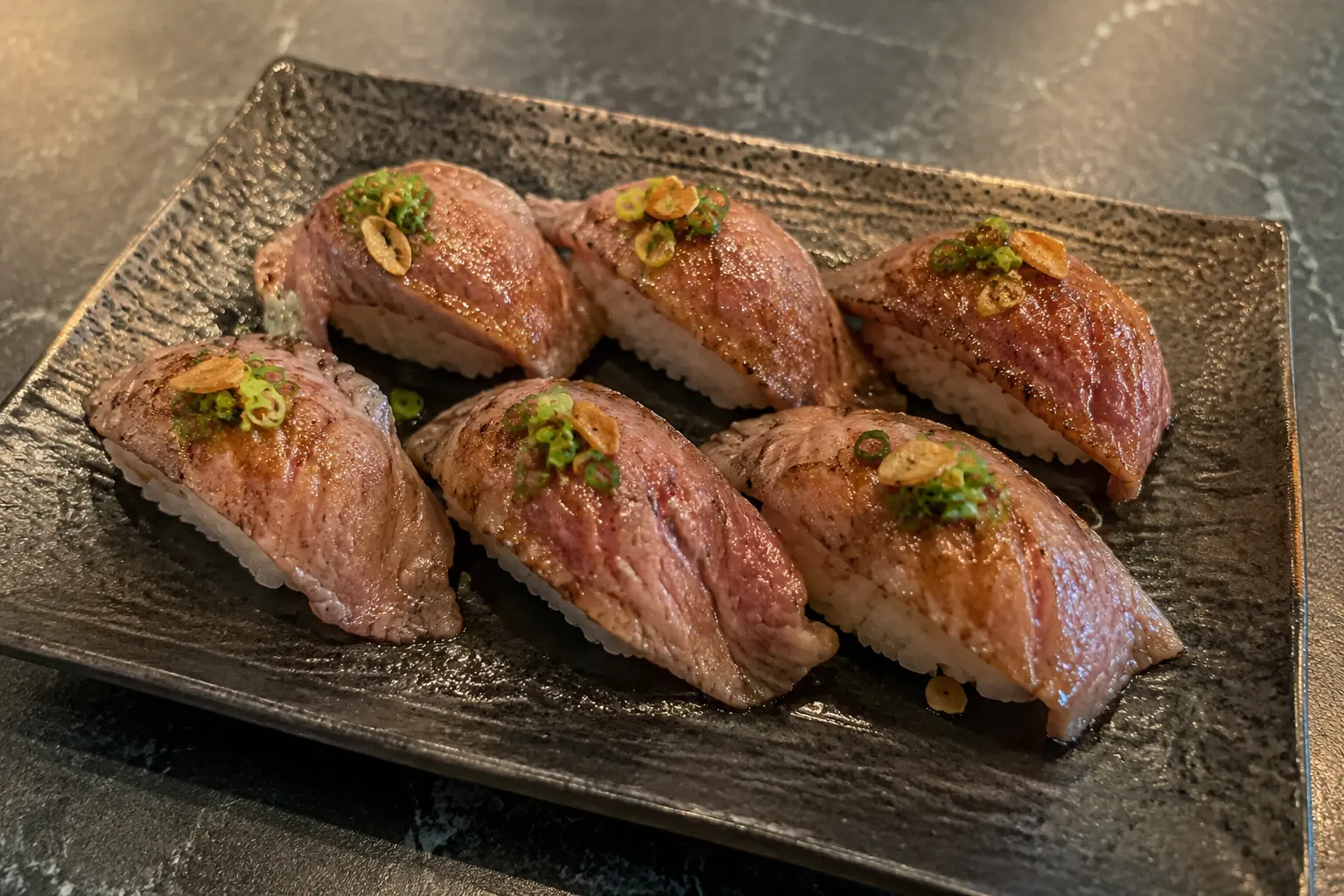
Flame seared wagyu beef aburi nigiri with garlic and spring onion - Illustrative Image
Questions diners ask us about aburi sushi
Can a menu say torched sushi instead of aburi?
Yes. Some menus use plain English wording such as torched sushi, seared sushi topping or flame-seared sushi. Those terms usually point to the same idea: heat has been applied to the surface.
Does aburi have to be served as nigiri?
No. Aburi is a searing method, so it can appear with different sushi forms. Nigiri is a common setting because the topping is visible and easy to sear.
Can aburi be part of a sharing order?
Yes. Aburi works well when the table wants a richer sushi bite among lighter pieces, gyoza or small plates. Ordering it as part of a mix keeps the meal balanced.
Will aburi taste smoky every time?
Aburi often has a light smoky aroma, but the strength depends on the topping and how the kitchen seasons it. Expect warmth and surface richness first, with smoke as part of the effect rather than the whole point.