

Can your Japanese lunch or dinner be good for you?
Yes, your Japanese lunch or dinner can be good for you when the order leans on fish, vegetables, seaweed and sensible portions. We look at the whole table: rice, soy sauce, fried fillings and rich sauces decide whether sushi feels fresh and filling, or heavier than you expected.
Plenty of people ask this because sushi looks light. That is a fair instinct, but the plate in front of you matters more than the idea of sushi in general. A few pieces of sashimi with cucumber-led rolls land very differently from several crunchy rolls with rich sauce and heavy dipping.
Once you think about the whole order, the answer becomes easier. You can keep the meal bright and clean, or make it fuller with gyoza, grilled dishes and richer sides. Both can be good choices if they match your appetite and the people at the table.
A useful sushi order gives you control. You can share, slow down, add vegetables, choose cooked options where needed and keep soy sauce in its place.
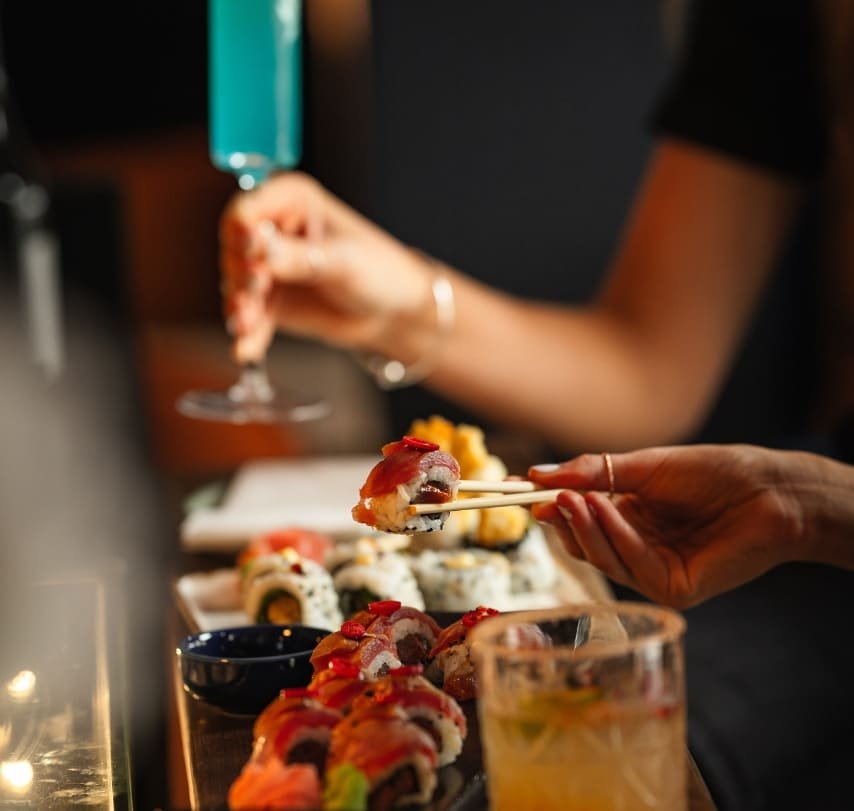
Diners sharing sushi and cocktails at Titu Japanese fusion restaurant London
Start with the whole sushi meal
Sushi works best as part of the whole table, not as a stack of rolls on its own. A healthy sushi meal usually comes from the balance between fish, vegetables, seaweed, rice and sauces.
Imagine two orders. One has sashimi, a vegetable roll, a little nigiri and something green on the side. Another leans on fried toppings, mayo-rich sauces and repeated bowls of soy sauce. Both are sushi meals, but they do a very different job.
Restaurant sushi gives you more room to adjust than a pre-packed box. You can share rolls, add vegetables, choose sashimi if you want less rice, or bring in a cooked dish if someone at the table wants something warmer. Vegetarian sushi belongs in that conversation too, because cucumber, avocado, seaweed and vegetable-led rolls can make the table feel fresher without making anyone feel short-changed.
Fish and vegetables carry the health case
Fish, seaweed and vegetables are the strongest reasons sushi can be a sensible choice. They bring the meal beyond plain rice and sauce, especially when you mix sashimi, nigiri or lighter rolls with vegetable-led dishes.
NHS fish advice says a balanced diet should include at least two portions of fish a week, including one portion of oily fish. One portion is around 140g, and oily fish includes salmon, sardines, trout and mackerel. That matters because salmon and other fish-led choices can give sushi a real place in a balanced week.
Salmon nigiri, sashimi and rolls with cucumber or avocado all give you a clean starting point. Grilled, steamed or baked fish is also described by the NHS as a healthier choice than fried fish, so a grilled dish can sit well beside sushi if you want a fuller dinner.
In a Mayfair lunch, sashimi is useful when you want the fish without as much rice. Rolls with vegetables make the order feel more complete. Fried fish and crunchy toppings have their place, but they change the weight of the meal fast.

From the kitchen: Ask for soy sauce on the side and taste the first piece before you dip the rest. It is easier to judge how much you need once the roll is in front of you.
Head Chef
TITU, Mayfair
Control rice, soy sauce and rich toppings
Order three rich rolls, dip every piece heavily in soy sauce, add tempura on the side, and a meal that looked light on the menu can feel heavy by the end. A lighter order comes from small choices around rice, soy sauce and fried toppings, not from treating every roll as the same.
At TITU, we see sushi as part of a shared table, so the easy fix is balance. One richer roll can work well if the rest of the order brings in sashimi, vegetables or a lighter small plate.
Use these three checks when you order:
- Rice: Sushi rice is part of the dish. Portion size is the thing to watch, so mix rice-led rolls with sashimi or vegetables if you want a lighter table.
- Soy sauce: NHS salt advice says adults should have no more than 6g of salt a day, about one level teaspoon, and it lists soy sauce among sauces that can be high in salt. Dip lightly, especially with rolls that already have sauce.
- Fried toppings: Tempura, crunchy coatings and mayo-rich sauces make sushi fuller. Choose them because you want that texture, then keep the rest of the order cleaner.
For people thinking about sushi for weight loss, we keep the advice simple. Look at the whole order, not the word sushi on the menu. Rice, sauce and fried pieces are the usual places where a modest meal quietly grows.
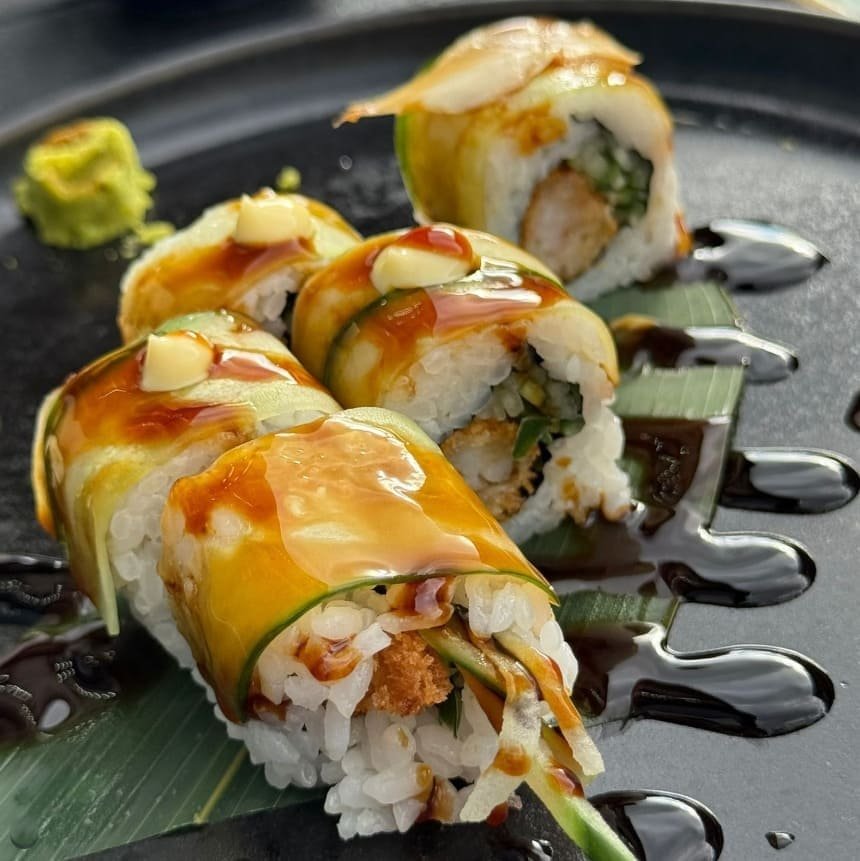
Mango and avocado sushi rolls, Titu Japanese fusion restaurant London
Raw fish needs the right diner
Raw fish is the point where the answer becomes personal. For many diners, sashimi and raw fish sushi are normal restaurant choices, but pregnancy and certain health situations change the order.
For most diners
Food businesses serving fishery products intended to be eaten raw, including sushi and sashimi, must apply parasite control rules unless an exemption applies. That gives raw fish in UK restaurants a clear food business framework.
We still treat raw fish as something that needs proper handling. Fresh taste, clean cutting and a calm, well-run kitchen all matter, and none of that turns raw fish into the right choice for every diner.
For pregnancy and higher-risk diners
NHS pregnancy advice says sushi made with cooked fish or cooked shellfish is safe to eat in pregnancy, while sushi made with raw fish or raw shellfish should be avoided. Cooked sushi, vegetarian rolls and grilled fish make ordering simpler.
During pregnancy, the NHS also gives limits on tuna and oily fish. Pregnant diners should follow that advice when choosing a sushi dinner, especially if tuna or salmon is on the table.
Anyone with a health condition that affects food risk should follow NHS advice or ask a clinician. In practice, cooked fish, cooked shellfish and vegetable-led dishes keep the meal easy without making the table feel restricted.
From the kitchen: If you are ordering for a group, note which pieces are cooked and which are raw before the food arrives. That makes it simpler to share without sorting plates at the table.
Head Chef
TITU, Mayfair
A balanced order is easy to build
Picture a mixed table in Shepherd Market: one person wants sushi, one wants something cooked, one is avoiding alcohol, and someone else is watching how heavy the meal gets. That is where a restaurant order is easier than a single box from a fridge.
For sushi at TITU, we cut nigiri, maki, sashimi and signature rolls to order, with vegetarian options across the sushi menu. The same table can bring in handmade gyoza, sharing plates, vegetables and non-alcoholic drinks, and all meat is sourced halal, including wagyu.
The table below compares lighter sushi order choices with fuller sushi order choices.
| Lighter order choices | Fuller order choices |
|---|---|
| Sashimi with vegetable rolls | Crunchy rolls with fried toppings |
| Nigiri with cucumber or seaweed-led sides | Several rice-led rolls for one person |
| Grilled fish beside sushi | Rich sauces across most dishes |
| Non-alcoholic refreshers or tea | A heavier drinks order with richer plates |
A balanced sushi order does not need ceremony. Start with the fish, look at the rice, notice the sauce, then decide whether fried pieces belong on that table today. Once you know those checks, sushi stops being a vague health question and becomes a menu you can read with confidence.
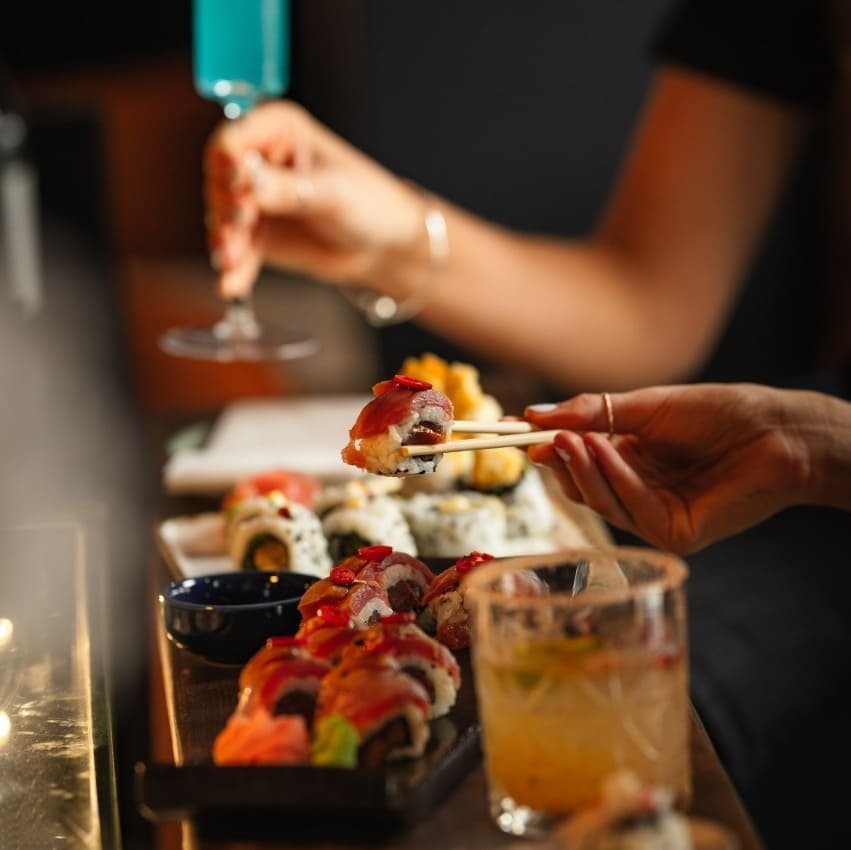
Sharing sushi and cocktails at Titu Japanese fusion restaurant London
Questions we get asked about sushi
Is takeaway sushi judged differently from restaurant sushi?
Takeaway sushi follows the same basic checks: fish, rice, sauce, salt and portion size. A restaurant table gives you more control because you can split dishes, add vegetables and stop when the meal feels right.
What should you say if you have a food allergy?
Tell the team before ordering, even if a dish looks simple. Menus can mark common dietary points, but allergy handling depends on the kitchen knowing what you need before the food is prepared.
Should you eat sushi every day?
Daily sushi is a personal diet question, so we would keep the answer practical. Sushi works best as part of varied eating, especially because soy sauce, rice-heavy orders and repeated rich toppings can add up.
Does wasabi make sushi healthier?
Wasabi changes flavour more than it changes the meal. The bigger health choices are still the fish, vegetables, rice, soy sauce and fried or rich additions.
Can sushi work for a client lunch without feeling too light?
Yes, sushi works well for a client lunch when the table mixes rolls with a cooked dish or a small plate. That keeps the meal easy to share and gives people enough choice without turning lunch into a heavy sit-down.