
Can your table enjoy Japanese food with no uncooked seafood?
Yes, your Japanese meal can avoid uncooked seafood and still feel like a proper table order. Choose vegetable sushi, clearly cooked rolls, and sharing plates such as gyoza or grilled dishes, then keep sashimi, tuna, salmon and any raw topping separate unless the team confirms otherwise.
That matters in Mayfair, where a mixed table can feel hard to order for. One person wants sushi. Another avoids raw fish. Someone else may be pregnant, vegetarian, halal-conscious or new to the whole thing.
The easy mistake is to treat the sushi section as one risk. We split it into clear paths: vegetable sushi, cooked sushi, raw choices for those who want them, and non-sushi plates that carry the meal. Once you order that way, nobody has to make their boundary the subject of lunch.
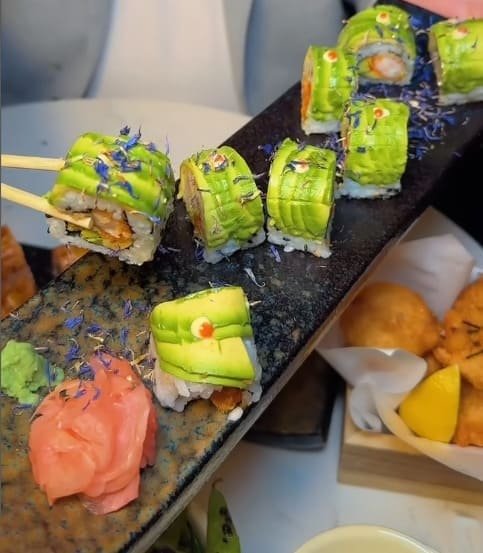
Assorted sushi rolls with avocado and pickled ginger, Japanese fusion London
In This Article
- Can your table enjoy Japanese food with no uncooked seafood?
- Sushi can be made without raw fish
- Cooked rolls keep the sushi order simple
- Vegetarian sushi gives you a full route through the menu
- Pregnancy, shellfish and raw toppings need a quick check
- A mixed table works best with one order pattern
- Questions we get asked about sushi without raw fish in Mayfair
Sushi can be made without raw fish
Sushi is built around vinegared rice, not raw fish. That rice is called shari, and it can sit with seafood, egg or vegetables. The topping may be raw or cooked, so the useful thing to read is the dish wording.
Sashimi is the one to separate in your mind. Sashimi is raw fish served without rice, so it belongs in a different lane from raw-fish-free sushi.
From there, ordering gets simpler. Look for maki, nigiri and rolls with cooked or vegetable fillings, then ask about any topping that sounds unclear. A menu can say salmon in one place and cooked salmon in another, and those are different orders.
Cooked rolls keep the sushi order simple
Cooked rolls give you the shape and feel of sushi with a filling that feels more familiar. On the TITU sushi menu, cooked and non-raw protein rolls sit alongside the raw options, so you can stay in the sushi section without guessing.
Good cooked sushi rolls to look for include:
- Crispy Ebi Roll, which is fried prawn with avocado. Fried prawn is cooked, though prawn still counts as shellfish.
- Cooked Salmon Roll, which keeps the order clear if you want salmon without raw texture.
- Chicken Katsu Roll, which uses breaded chicken with cucumber and feels closer to a familiar crisp bite.
If the wording leaves any doubt, ask one plain question: is any part of this roll raw? That covers the filling, the topping and the garnish.

From the kitchen: Ask for sauce and garnish details before the order is sent. A roll can look safe on the page and still include a topping that changes the choice.
Head Chef
TITU, Mayfair
Vegetarian sushi gives you a full route through the menu
Picture a table where one guest avoids fish completely and everyone else still wants sushi. Vegetarian sushi keeps that guest inside the same shared order, which makes the meal easier to manage.
Vegetable rolls are the easiest first choice
Avocado, cucumber and green rolls are the safest place to start when the issue is fish itself. Our printed menu includes Yasai Roll at 4 pieces for £7.50, Avocado Maki and Cucumber Maki at 6 pieces for £6.00 each, and Avocado Nigiri at 3 pieces for £7.00.
Green Futomaki gives you 5 pieces for £9.00, and Green Dragon Roll gives you 4 pieces for £9.50. Those choices let a fish-free diner eat sushi with the table, rather than being pushed straight into a side dish.
Menu marks help with mixed needs
Dietary marks do a lot of quiet work when you are ordering for other people. GF means gluten free, V means vegetarian, and VG means vegan. An asterisk marks nuts, and a tilde marks shellfish.
Those marks are useful because vegetarian, vegan, gluten free, nut-aware and shellfish-aware choices are different questions. A vegetable roll may suit one guest perfectly, while another person still needs to avoid nuts or shellfish marks.
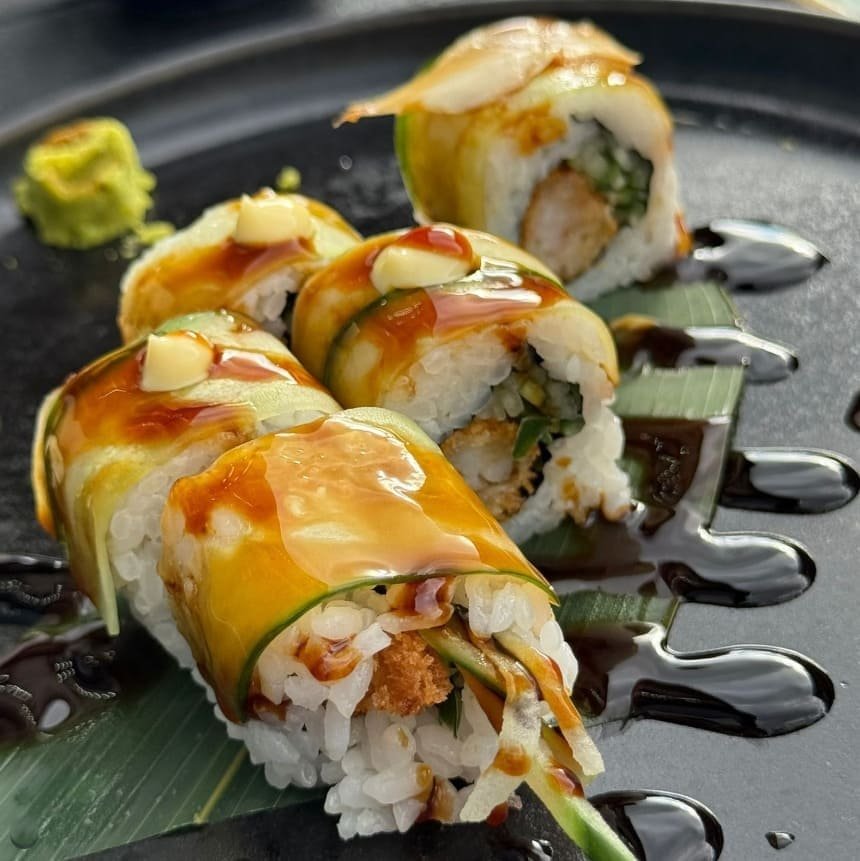
Mango and avocado sushi rolls, Titu Japanese fusion restaurant London
Pregnancy, shellfish and raw toppings need a quick check
“Is this one okay?” is the right question to ask before anyone orders under pressure. The safest rhythm is to read the name first, then ask about the part you cannot see.
- Read the dish name for words such as cooked, fried, katsu or vegetable.
- Ask whether the topping or garnish contains raw fish if the wording is unclear.
- Mention pregnancy or shellfish concerns before the order is placed.
Cooked salmon is a clear order, not a guarantee that every salmon roll is cooked. Tuna and salmon need the same calm check, because the word alone tells you the fish type, not how it is prepared.
For pregnancy, we follow the NHS wording. Its advice, last reviewed on 15 June 2026 with the next review due on 15 June 2029, lists cooked fish, cooked shellfish and sushi made with cooked fish or cooked shellfish as safe to eat in pregnancy. It says raw fish, raw shellfish and sushi made with raw fish should be avoided.
From the kitchen: Save a photo of the menu screen when you find a good cooked order. It makes repeat visits faster when you want the same table mix again.
Head Chef
TITU, Mayfair
A mixed table works best with one order pattern
Once you stop making sushi carry the whole meal, the table opens up. In Shepherd Market, Mayfair, TITU works well for this because sushi can sit beside gyoza, grilled dishes, rice and small plates without turning the order into two separate meals.
Our menus page gives a simple planning guide: three to four dishes each is a comfortable amount for sharing. Gyoza come as five pieces per plate, and the same order can bring in chicken katsu, aubergine miso, teriyaki salmon, steamed rice and salads.
The table below compares common table needs with order patterns that keep raw fish optional.
| Table need | Order pattern |
|---|---|
| One guest avoids raw fish | Cooked roll, vegetable sushi, gyoza and rice |
| One guest avoids fish altogether | Avocado or cucumber sushi, aubergine miso, salads and rice |
| A mixed sushi table | Raw choices for those who want them, cooked and vegetable choices for the rest |
| A full meal beyond sushi | Gyoza, chicken katsu, grilled dishes, rice and vegetables |
The priority is balance. Build the order around cooked, vegetable and sharing plates first, then let raw fish sit as a choice for whoever wants it.
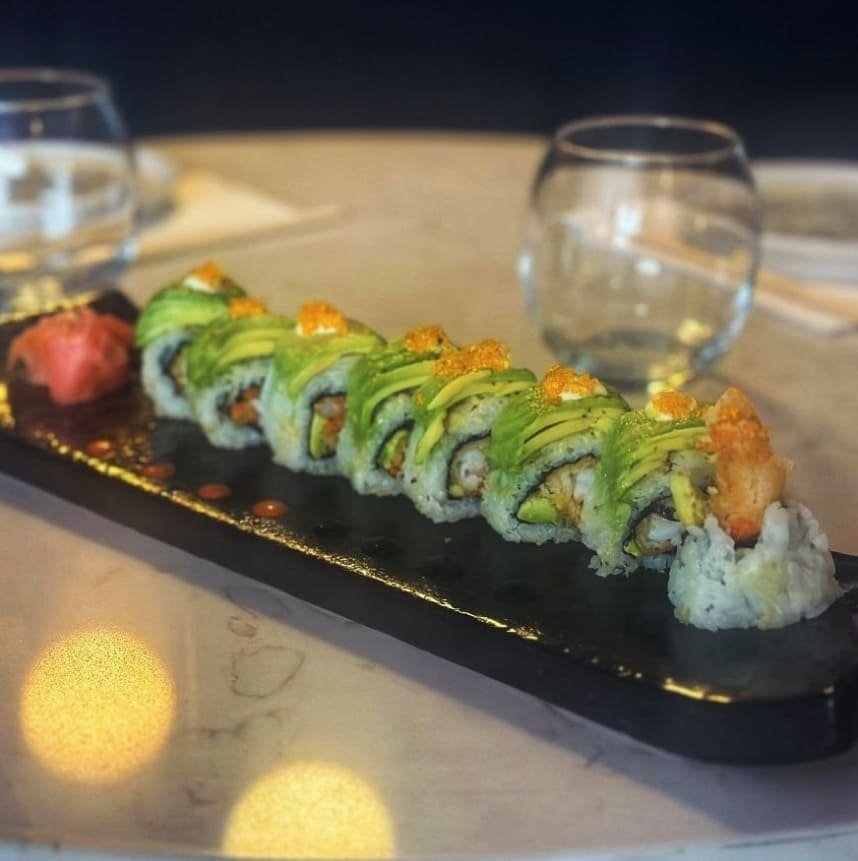
Avocado topped sushi rolls with prawn tempura at Titu London
Questions we get asked about sushi without raw fish in Mayfair
Are gyoza classed as sushi?
Gyoza are dumplings, so they sit outside the sushi section. They work well in the same meal because each plate has five pieces and they are easy to share.
Can we order the same raw-fish-free choices at lunch and dinner?
Yes. The full menus run through the day, with the kitchen open from 12pm to 11pm Monday to Saturday and from 2pm on Sundays. The site states there are no separate lunch and dinner windows for the full menus.
How do we read the sushi portion sizes?
Uramaki and Crunch Touch rolls come as 4 pieces, maki as 6 pieces, and nigiri as 3 pieces. Sashimi is 5 pieces, Sashimi Mix is 10 pieces, Chef’s Special Rolls and Futomaki are 5 pieces, and Signature Rolls are 4 pieces.
Does halal meat mean every dish suits every halal-conscious diner?
All meat we serve is sourced halal, including the wagyu. Alcohol is served on the premises and some dishes contain alcohol, so the cleanest route is to tell our team what you avoid when ordering.